
Company-Owned Fleet vs. Long-Term Car Rental: What Should Businesses Consider?
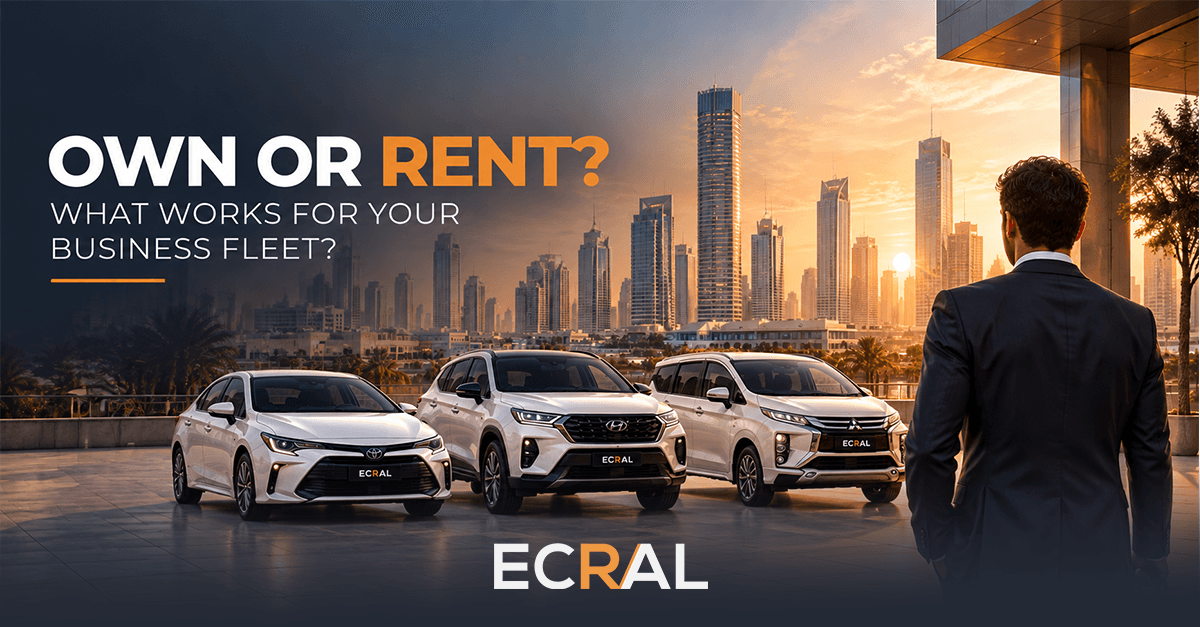
For many businesses in Egypt, vehicles are more than transportation. They support daily operations, employee mobility, client meetings, field teams, project requirements, and executive travel.
But when a company needs vehicles for the long term, an important question arises:
Should the business purchase and manage its own fleet, or use long-term corporate car rental?
There is no single answer that works for every organization. The right decision depends on several factors, including cash flow, fleet size, expected usage, operational requirements, and the company's ability to manage vehicles internally.
Before making that decision, businesses should look beyond the monthly payment and consider the total operational and financial impact of each model.
1. Upfront Investment and Capital Allocation
Building a company-owned fleet requires significant upfront capital.
Purchasing multiple vehicles can tie up funds in assets that may depreciate over time. In addition to the purchase price, businesses may also need to budget for registration, insurance, licensing, and other initial expenses.
For some organizations, ownership may make sense when vehicles will remain in operation for many years and the company has the resources to manage them effectively.
Long-term car rental, on the other hand, can reduce the need for a large initial investment by converting vehicle requirements into a more predictable operating expense.
This can allow businesses to preserve capital for other priorities such as expansion, technology, recruitment, or core operations.
The question is therefore not simply:
Which option costs less?
It is also:
Where can our capital create the most value for the business?
2. Predictability of Monthly Costs
Owning a vehicle does not mean its costs end after the purchase.
Companies need to account for several ongoing expenses, including:
• Preventive maintenance
• Repairs and unexpected breakdowns
• Insurance
• Registration and licensing
• Tires and consumable parts
• Fleet administration
• Vehicle replacement
• Depreciation
Some of these costs are predictable. Others are not.
With a structured corporate car rental agreement, many vehicle-related services can be incorporated into a defined monthly cost, depending on the terms of the contract.
For finance and procurement teams, greater cost visibility can make budgeting and forecasting easier.
However, businesses should carefully review what is actually included in any rental agreement, particularly mileage allowances, insurance conditions, maintenance coverage, replacement vehicle policies, and additional charges.
3. Maintenance and Repairs
A company-owned fleet also means taking responsibility for keeping that fleet operational.
As the number of vehicles increases, so does the administrative work involved in scheduling maintenance, managing repairs, communicating with workshops, sourcing parts, and monitoring vehicle condition.
The real cost is not only the repair bill.
It also includes the time and internal resources required to manage the process.
With long-term corporate car rental, maintenance and repair responsibilities may be handled by the rental provider according to the agreed service terms.
For businesses without a dedicated internal fleet management team, outsourcing these responsibilities can significantly simplify day-to-day operations.
4. Vehicle Downtime and Business Continuity
A vehicle sitting in a workshop can have a larger business impact than its repair cost suggests.
If the vehicle is used by a sales representative, engineer, project manager, executive, or field employee, downtime may affect productivity and disrupt scheduled activities.
This is why businesses evaluating long-term car rental in Egypt should pay close attention to the provider's replacement vehicle policy.
Questions worth asking include:
How quickly can a replacement vehicle be provided?
What happens if a vehicle requires extended maintenance?
Is support available when an unexpected breakdown occurs?
A strong mobility strategy should not focus only on providing vehicles. It should also consider how operations continue when something goes wrong.
5. Depreciation and Resale
Vehicles are depreciating assets.
When a company purchases a fleet, it also assumes the financial impact of depreciation and the responsibility of eventually selling or replacing those vehicles.
Resale values may vary depending on vehicle age, mileage, condition, market demand, and broader economic conditions.
This means fleet ownership requires businesses to think about the entire vehicle lifecycle:
Purchase → Operation → Maintenance → Depreciation → Replacement → Resale
With long-term rental, the business typically does not have to manage the resale process at the end of the vehicle's lifecycle.
For companies that prefer to focus internal resources elsewhere, removing this responsibility can simplify fleet planning.
6. Flexibility and Scalability
Business requirements rarely remain static.
A company may win a new contract and suddenly need additional vehicles.
A project may require SUVs for several months.
A growing team may need more sedans.
Another department may require larger vehicles for employee transportation.
With an owned fleet, adapting to these changes may require purchasing additional vehicles or selling vehicles that are no longer required.
A flexible corporate car rental solution can make it easier to adjust fleet requirements according to changing operational needs, subject to contract terms and vehicle availability.
For growing businesses and project-based organizations, this flexibility can be particularly valuable.
7. Fleet Administration
The larger the fleet, the more administration it creates.
Someone within the organization must manage areas such as:
• Vehicle documentation
• Maintenance schedules
• Insurance
• Licensing and renewals
• Driver assignments
• Accident procedures
• Repair follow-up
• Vehicle replacement
• Cost monitoring
For companies with a dedicated fleet management operation, these responsibilities may already be part of the organizational structure.
For others, they can become a significant administrative burden.
When comparing fleet ownership with corporate vehicle rental, businesses should therefore consider not only direct vehicle costs but also the internal resources required to manage them.
8. Vehicle Choice and Fleet Standardization
Ownership can provide businesses with complete control over which vehicles they purchase and how long they retain them.
However, changing vehicle categories as operational needs evolve can be slower and require additional capital.
A corporate rental fleet can offer access to different vehicle categories depending on business requirements — from economical sedans for everyday operations to SUVs and larger vehicles for specific teams or assignments.
The right approach depends on whether the organization prioritizes long-term asset control or operational flexibility.
So, Which Model Is Right for Your Business?
There is no universal winner between owning a company fleet and using long-term car rental.
Fleet ownership may be suitable when:
The business intends to keep vehicles for an extended period, has sufficient capital available, can efficiently manage maintenance and administration internally, and values ownership of the asset.
Long-term corporate car rental may be suitable when:
The business prioritizes predictable costs, reduced fleet administration, maintenance support, operational flexibility, access to replacement vehicles, and the ability to scale vehicle requirements without purchasing additional assets.
The most effective decision should be based on the company's total cost of mobility, rather than the purchase price or monthly rental rate alone.
Think Beyond the Vehicle
A company fleet should ultimately support the business — not become another operational challenge to manage.
Whether an organization chooses ownership, long-term rental, or a combination of both, the objective should remain the same:
Reliable mobility, controlled costs, and minimal disruption to business operations.
At ECRAL, we work with businesses to provide flexible corporate car rental and long-term mobility solutions in Egypt, designed around real operational requirements.
From different vehicle categories and long-term rental arrangements to maintenance support and replacement vehicle solutions, our approach is focused on helping businesses keep their teams moving while simplifying fleet operations.
Because corporate mobility is not simply about having cars available.
It is about having the right mobility solution for the way your business operates.